Table of contents
Visa rules can change in a single press release, and for globally mobile families and entrepreneurs, that volatility is no longer theoretical. Over the past two years, governments from Europe to the Pacific have tightened screening, raised fees, or paused investor routes, while airlines, banks, and border systems have become more sensitive to sanctions risk and documentation gaps. In that climate, some investors have pursued faster citizenship-by-investment options not as a luxury, but as contingency planning, and their stories reveal what happens when immigration policy shifts overnight.
A border officer’s question, a life rerouted
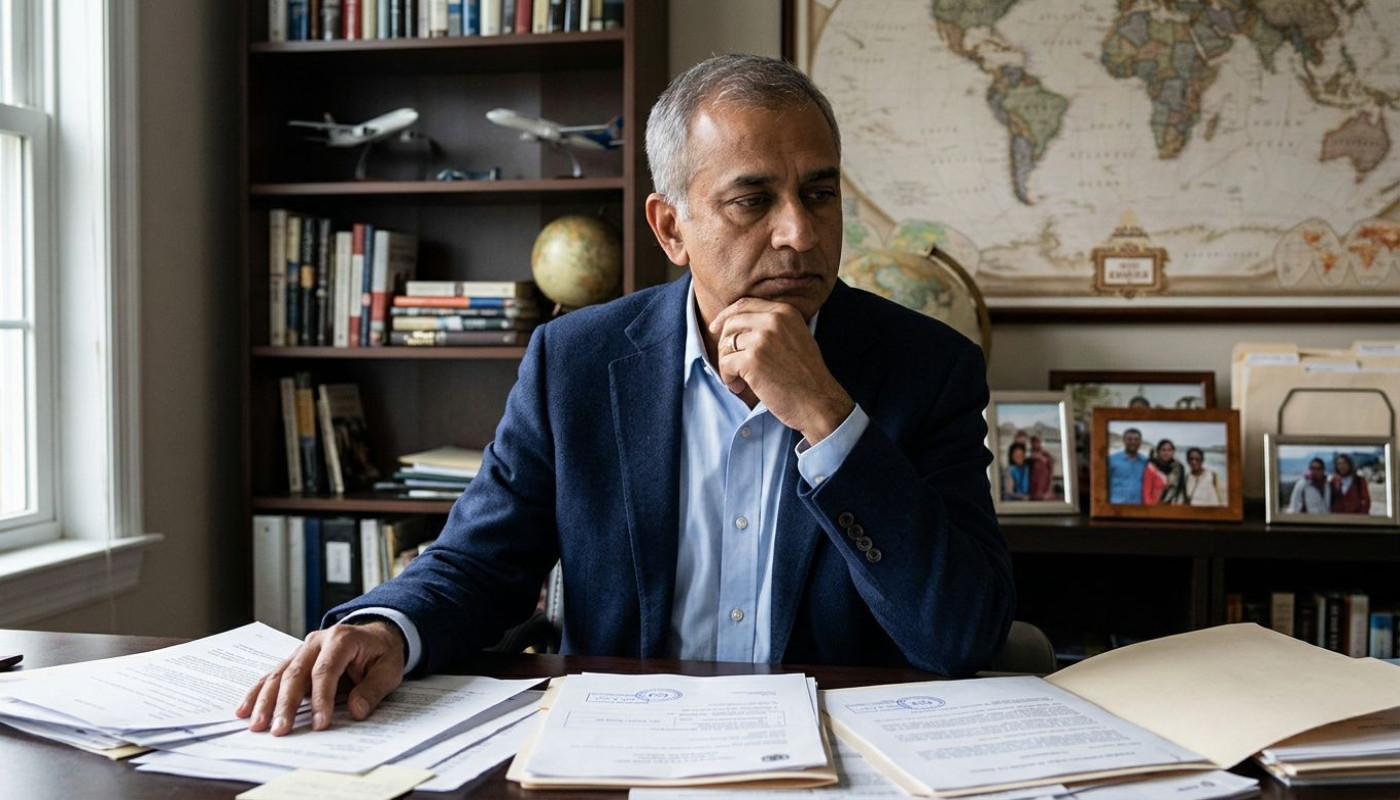
“Why are you here so often?” It is the kind of question that sounds casual until it isn’t, and for Daniel, a technology consultant who splits his time between the Gulf and Southeast Asia, it marked the moment he realised how exposed his travel life had become.
He had been entering on legitimate short stays for years, sometimes for client meetings, sometimes to check on a small team, always conscious of the letter of the law, yet dependent on the goodwill of the system. When a country adjusted its entry practices after a policy review, the rules on paper did not change dramatically, but the tone at the desk did, and the scrutiny became personal. “Nothing was refused,” he recalls, “but everything felt conditional.” That feeling was enough to trigger a financial and legal audit of his mobility strategy, including which passports could open doors quickly, which residency permits were vulnerable to political cycles, and what would happen if a visa waiver disappeared.
Investor citizenship, he found, is often marketed as lifestyle, but used as risk management, and the distinction matters. The immediate costs are visible, while the hidden costs of uncertainty, cancelled trips, delayed contracts, and family stress are harder to price. He began to model his own exposure the way he would model a business: probability of disruption, cost of disruption, and time needed to recover. Several advisers he spoke with pointed to small jurisdictions that process files in months rather than years, although the trade-off is strict due diligence and non-trivial fees, and he insisted on understanding the numbers in detail before choosing a path, including the vanuatu citizenship cost as part of a wider comparison.
What surprised him most was not the headline price but the structure of the decision. A second passport, in his view, was not about evading rules, because legal routes exist precisely to formalise status, it was about reducing single-country dependence in a world where geopolitics increasingly spills into everyday travel. “You don’t notice how fragile it is,” he says, “until a desk officer hints that next time could be different.”
Bank compliance tightened, then the passport mattered
One email from a bank can do what years of planning never did: force a decision. For Leila, an entrepreneur with suppliers across three continents, the trigger was not an airport queue but a compliance review that suddenly treated her documentation as a risk to be reassessed.
She had always worked through mainstream institutions, filed taxes, documented income, and maintained clean corporate records, yet during a period when global “know your customer” controls intensified, her profile was reclassified. The bank requested additional proof of ties, asked for new certifications, and temporarily slowed transfers that her business relied on, and while none of this was illegal or unusual in the compliance world, the operational impact was immediate. “I was spending my week proving I was myself,” she says, “and the business was paying for it.”
Financial institutions have become increasingly cautious, in part because regulators in major markets can impose heavy penalties for weak controls. That means clients who are fully legitimate can still feel the system harden around them when their passport, country of residence, or travel pattern sits near a risk threshold. In Leila’s case, advisers argued that a more “neutral” travel identity could reduce friction, although they also warned that no passport eliminates compliance, and that transparency and documentation remain decisive. She pursued an investor citizenship route after mapping out which jurisdictions were stable, how long processing might take, and what due diligence would require, including certified records and verifiable sources of funds.
The practical lesson, she says, is that mobility and banking are now intertwined. Citizenship can affect visa access, but it can also influence how easily you can open accounts, onboard with payment processors, or reassure counterparties that a contract will not be disrupted by sudden travel limits. Still, she stresses that the decision should be made with clear eyes: it is expensive, it takes professional support, and it cannot be treated as a shortcut. “It’s not magic,” she says, “but it’s leverage, and in my world, leverage is time.”
Families moved first, lawyers followed fast
When policy shifts, children feel it before adults do. That was the reality for Marco and Ana, a couple with two school-age daughters, who had built their life around international education, a rotating schedule between countries, and a belief that renewals would remain routine.
Then came a change in residency practice, not necessarily a single dramatic ban, but a combination of stricter documentation, longer processing times, and less predictable outcomes. Their daughters’ school needed proof of status by a certain date, landlords demanded up-to-date permits, and airlines increasingly asked for documentation that matched the newest rules, and the family’s planning horizon collapsed. “We had a calendar,” Ana says, “and suddenly it meant nothing.”
The couple hired immigration counsel in multiple jurisdictions, because what counts as a valid bridge in one country can be irrelevant in another, and they learned quickly that the most valuable asset in a crisis is not optimism but options. Some of those options were local, such as alternative residency categories or accelerated renewals, while others were global, including investor citizenship programmes that could provide a durable status for travel and long-term settlement planning. Their advisers emphasised a blunt truth: governments can change the terms, and even when grandfathering exists, timelines become uncertain, and uncertainty is poison when a school year is involved.
They ultimately treated the process like an emergency relocation plan, building redundancy into everything: copies of civil documents, apostilles, translated certificates, bank letters, and a clear narrative of their family’s history. The due diligence questions, they say, were more intense than they expected, and they welcomed that, because a passport that is not screened is a passport that can later be devalued. “We didn’t want a paper,” Marco says, “we wanted durability.”
Today, their story is less about a destination and more about resilience. They still value the countries where they lived, they still comply with visas and taxes, and they still make choices based on culture and work, yet they no longer assume that stability is automatic. For them, the emotional core of investor citizenship was simple: avoid putting children’s schooling on the line when policy winds change.
What the fastest programmes don’t advertise
Speed is seductive, and it is also misunderstood. The investor citizenship market thrives on promises of months, not years, and in a world of delayed consular appointments and unpredictable processing backlogs, that pitch lands, but the people who have gone through it describe a more complicated reality.
First, the “timeline” is not only the government’s clock; it is yours. Applicants who move quickly usually arrive with organised documentation, clean records, and funds that can be proven without ambiguity. Where wealth is complex, spread across jurisdictions, or tied to corporate structures, delays can come from clarifying the source of funds, producing certified corporate records, or resolving minor inconsistencies that seem irrelevant until they become a due diligence question. The second reality is that reputable programmes do not run on trust, they run on verification, and that verification can include background checks, screening for sanctions exposure, and reputational assessments that are not negotiable.
Second, the price tag is rarely a single number. Beyond the core contribution or investment, applicants often face government fees, agent or legal costs, document procurement expenses, translations, notarisation, and in some cases, costs linked to dependants. That is why people who have been through the process urge others to map the full budget early, and to treat marketing figures with caution. The right question is not “what is the cheapest passport?” but “what is the total cost to reach issuance with no surprises?” In that context, comparing published breakdowns, understanding what is included, and stress-testing scenarios for a family versus a single applicant becomes essential, and it is also where cost calculators and programme explainers can be useful, including references that outline the vanuatu citizenship cost alongside typical fee components.
Finally, a second passport does not erase legal obligations. Tax residency rules, reporting requirements, and local compliance still apply, and anyone approaching investor citizenship as an escape hatch is likely to make expensive mistakes. The investors who sound most credible are those who speak about continuity, not avoidance: keeping business running, protecting family mobility, and ensuring that a sudden policy shift does not shut down a life built across borders.
How to plan now, before the next shock
Policy volatility is no longer a niche concern, and the most revealing pattern in these stories is not wealth, it is preparedness. The people who weather sudden immigration shifts best are those who build a plan before they are forced to improvise at a border, in a bank compliance queue, or in a school administrator’s office.
Start with the obvious, but do it properly: audit your travel footprint, your visa dependencies, and your family’s documentation. Many disruptions begin with something mundane, an expired certificate, a mismatch between a name spelling on two documents, or a missing apostille. Then take a sober look at timelines, because in immigration, time is the currency you cannot borrow. If you might need a new status in six months, you should assume you need to start now, especially when multiple jurisdictions, translations, and legalisations are involved.
Next, budget like a journalist, not a marketer: ask for itemised cost ranges, ask what triggers extra fees, and ask what happens if the file is delayed. Investor citizenship can be part of the answer, but only when the legal basis is clear, the due diligence is robust, and the total cost is understood. If you are comparing options, insist on clarity about dependants, government charges, and professional fees, and get independent legal advice where possible, because the consequences of a mistake are not theoretical. A rejected file can complicate future applications, and a poorly structured plan can create tax or reporting headaches later.
Above all, treat mobility as infrastructure. You insure property you hope never to lose, and you maintain systems you hope never to stress-test, and in 2026’s immigration landscape, the ability to move legally and predictably has become a form of infrastructure too, one that can fail suddenly if you have no redundancy. The people who acted early did not predict the exact shock, they simply refused to be trapped by it.
Booking, budgets, and the paperwork that decides everything
Anyone considering investor citizenship should start with a consultation, then request an itemised budget and timeline in writing, because fees, dependants, and document work can shift the total materially. Build in room for notarisation, translations, and urgent certificates, and ask about available government support measures or expedited channels where they exist, because in this market, preparation saves months.
On the same subject

Why visit France?
Mexico’s president slams Twitter, Facebook, and others for suspending President Trump’s account